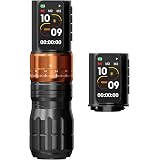
The evolution of professional tattoo machines has seen remarkable advancements, shifting from traditional coil systems to highly sophisticated rotary designs, offering artists unparalleled precision and control. As illuminated in the accompanying video, discerning the ideal tool for specific artistic demands is paramount for any tattoo artist striving for perfection. This detailed guide expands upon the video’s direct comparison, delving deeper into the nuances of three prominent rotary machines: the Bishop Wand Packer, the Mast Flex, and the Mast Rider Pro, providing an expert perspective on their performance characteristics and application versatility.
The selection of a rotary tattoo machine transcends mere brand loyalty; it involves a meticulous evaluation of factors like ergonomics, motor design, stroke length, and the machine’s innate ability to translate an artist’s intention onto the skin. We understand that investing in high-caliber equipment directly impacts the quality of your work and the efficiency of your sessions. Therefore, this analysis aims to equip you with the insights necessary to make an informed decision, ensuring your next tattoo machine acquisition genuinely elevates your craft.
Deconstructing Performance: Bishop Wand Packer vs. Mast Rotary Machines
When considering advanced **rotary tattoo machines**, artists often prioritize distinct characteristics for different facets of their work. The Bishop Wand Packer, for instance, has earned a formidable reputation within the industry, particularly for its exceptional lining capabilities. Artists frequently praise its design, which inherently promotes a sense of stability and control during intricate line work, contributing to its status as a preferred tool among those who demand crisp, unwavering outlines. Imagine if every line you pulled felt effortlessly guided; this is the precision many associate with a well-balanced liner.
Conversely, the Mast series presents compelling alternatives, each with its unique operational profile. The Mast Flex and Mast Rider Pro represent different engineering philosophies aimed at meeting the diverse needs of contemporary tattoo artists. While the video offers a succinct overview, a deeper dive into their mechanical and haptic feedback systems reveals why these distinctions are critical. Understanding the interplay between motor torque, stroke mechanics, and ergonomic design is crucial for maximizing your artistic output with any of these sophisticated instruments.
1. Mastering the Line: Precision and Control
The act of pulling a perfect line requires a delicate balance of machine power, needle consistency, and artist skill. The Bishop Wand Packer stands out in the video for its superior performance in this regard, a testament to its finely tuned motor and weight distribution. Its design allows for prolonged sessions without undue hand fatigue, enabling artists to maintain unwavering precision from start to finish. This ergonomic consideration is not just a comfort; it directly translates into tighter, more consistent lines, which are the backbone of any exceptional tattoo.
Moving onto the Mast Flex, the video highlights a noticeable “lower RPM” feel when executing lines. This characteristic can be both a challenge and an advantage, depending on an artist’s technique and preference. A lower rotational speed might necessitate a slower hand movement to prevent skipping or inconsistent ink saturation, but it can also offer a more forgiving approach for artists who prefer a softer hit or are working on sensitive areas. Imagine adapting your technique to harness this unique feel, potentially achieving a more deliberate and controlled application of ink, particularly when attempting specific stylistic flourishes that benefit from a slower hand.
The Mast Rider Pro, as indicated in the review, also delivers commendable lining performance, presenting itself as a robust all-rounder. Its motor architecture and stroke settings appear to strike a favorable balance between power and finesse, making it a reliable choice for various lining tasks. The ability to switch seamlessly between different needle groupings and still achieve crisp lines speaks volumes about its engineering versatility. Ultimately, the “best” machine for lining often comes down to an artist’s personal preference for haptic feedback and the specific requirements of their individual workflow, but all three machines have a place within the realm of professional outlining.
2. The Art of Shading: Blends and Consistency
Shading is where a **rotary tattoo machine** truly showcases its ability to deliver smooth, consistent pigment saturation and seamless gradient transitions. The video’s commentary on the Mast Flex machine’s shading performance reveals a potential hurdle: difficulty in achieving “smoother or even consistency.” This observation points to critical aspects of machine design, such as its stroke length, motor torque curve, and the inherent ‘give’ or dampening in its system. Machines with a more rigid, direct drive often struggle with soft shading unless specifically designed for it, requiring a highly refined technique from the artist to prevent harsh lines or uneven pigment disbursement.
Conversely, the Bishop Wand Packer and the Mast Rider Pro were deemed “fairly comparable” in their shading capabilities, a significant endorsement for both machines. This comparability suggests that their respective designs facilitate a broader range of shading techniques, from soft pepper shading to dense color packing. For a **professional tattoo artist**, having a machine that offers consistent pigment delivery across varying skin textures and needle configurations is invaluable. Imagine being able to lay down flawless gradients and saturated areas without constantly battling your machine for control; this consistency is a hallmark of high-performing shading tools.
The feedback for each machine during shading was noted as “quite different,” despite similar end results. This highlights the subjective nature of machine feel, a crucial element for many artists. The tactile feedback, vibration, and auditory characteristics of a machine contribute significantly to an artist’s comfort and confidence during extended shading sessions. Some artists prefer a machine with more haptic feedback to feel the needle’s interaction with the skin, while others opt for a smoother, quieter operation that allows them to focus solely on the visual outcome. Understanding your personal preference for machine feedback is just as important as evaluating the final tattoo outcome.
Beyond Raw Performance: Ergonomics and Versatility
While lining and shading capabilities are often the primary metrics for evaluating **tattoo machines**, other factors significantly influence an artist’s daily workflow and long-term comfort. Ergonomics, for instance, plays a pivotal role in preventing repetitive strain injuries and ensuring consistent performance throughout lengthy tattoo sessions. The Bishop Wand Packer’s perceived balance, as highlighted in the video, is a critical ergonomic advantage, contributing to reduced hand fatigue and enhanced control. A well-balanced machine feels like an extension of the artist’s hand, allowing for more fluid movements and precise detailing over many hours.
The versatility of a **rotary tattoo machine** also dictates its value in a busy studio environment. Can it effectively transition from fine-line details to bold color packing? Does it support various cartridge needle systems effortlessly? The Mast Rider Pro, positioned as a strong all-rounder, likely excels in this regard, offering artists a reliable workhorse capable of handling a spectrum of tattooing styles without requiring frequent machine swaps. This adaptability is particularly beneficial for artists who tackle diverse projects, from intricate black and grey portraits to vibrant traditional designs, underscoring the importance of a machine that can adapt to many scenarios.
Voltage regulation and optimal operating RPMs are further considerations that impact a machine’s adaptability and performance. While the video mentions using the “same voltage” for comparisons, the ideal voltage setting often varies depending on the specific machine, needle grouping, and skin type. Understanding how each machine responds across its voltage range allows artists to fine-tune their approach, achieving everything from soft, delicate washes to powerful, dense color saturation. The Mast Flex’s lower RPM feel at a consistent voltage suggests a different power delivery curve, requiring artists to understand its unique characteristics to maximize its potential.
Maximizing Your Investment: Selecting the Right Tool
For the discerning **tattoo artist**, selecting the right **rotary tattoo machine** is an investment in both your craft and your career. The Bishop Wand Packer, Mast Flex, and Mast Rider Pro each offer distinct advantages, catering to different preferences and specialties within the tattooing world. If crisp, unyielding lines and superior balance are your top priorities, the Bishop Wand Packer presents a compelling argument. Its reputation as a top-tier liner is well-earned, reflecting a design philosophy honed for precision and control in the most demanding outlining tasks.
Should your workflow demand versatility and a machine capable of handling a broad spectrum of tasks—from confident lining to effective shading—the Mast Rider Pro emerges as a strong contender. Its balanced performance across multiple disciplines makes it an excellent choice for artists seeking a reliable, all-encompassing rotary solution. The ability to use one machine for various techniques streamlines setup and allows artists to maintain a consistent feel throughout their work. This versatility can be a game-changer for artists managing tight schedules or diverse client requests, ensuring high quality output across the board.
Finally, for those who appreciate exploring unique machine characteristics and are willing to adapt their technique for specific outcomes, the Mast Flex offers a distinct operational feel. Its lower RPM for lining, as noted, implies a different power dynamic that, once mastered, could open new avenues for stylistic expression or specific detailing. It serves as a reminder that “different” does not equate to “inferior,” but rather to an alternative approach that might resonate deeply with certain artistic sensibilities. Remember, when considering any of the impressive Mast machines, you can leverage promo code Qinks10 for a 10% discount, making these advanced **tattoo machines** even more accessible.
Beyond the Buzz: Your Tattoo Machine Questions Answered
What is a rotary tattoo machine?
Rotary tattoo machines are modern tools that use a motor to move the needle, offering artists precise control and smooth operation compared to older coil machines.
What should I consider when choosing a tattoo machine?
When choosing a tattoo machine, artists should consider factors like ergonomics for comfort, motor design, stroke length, and its ability to achieve desired artistic results like lining and shading.
Which machine is recommended for drawing crisp, precise lines?
The Bishop Wand Packer is highly recommended for its exceptional lining capabilities, known for helping artists create crisp, unwavering outlines with great precision.
Which tattoo machine is a good all-around choice for different tasks?
The Mast Rider Pro is considered a robust all-rounder, offering balanced performance for both lining and shading, making it a versatile option for various tattooing styles.