Decoding Tattoo Machines: Coil vs. Rotary for Precision and Power
Navigating the world of tattoo machines can feel like choosing between a finely tuned sports car and a heavy-duty workhorse. Each machine has its unique advantages, making the decision of which to use a critical factor in the success of any tattoo. As the video above expertly highlights, understanding the fundamental differences between coil and rotary tattoo machines is key to optimizing your artistry, achieving impeccable results, and truly unlocking your potential as a tattoo artist.
Many artists grapple with the challenge of selecting the ideal machine for specific tasks, often leading to frustration or less-than-perfect outcomes. The solution lies in a deeper understanding of how each machine operates and excels. By dissecting the mechanics and ideal applications of coil, rotary, and even hybrid tattoo machines, you can confidently choose the right tool for every line, shade, and color pack, transforming your workflow and elevating your craft.
1. The Fundamental Mechanics: Force vs. Speed in Tattoo Machines
The core distinction between coil tattoo machines and rotary tattoo machines lies in their operating principles. This difference dictates their feel, performance, and ultimately, their ideal use cases.
-
Coil Tattoo Machines: Power Through Electromagnetism
Coil machines operate on the principle of electromagnetism. When electricity flows through the coils, it creates a magnetic field that rapidly pulls down an armature bar. This bar then strikes the needle into the skin. As the power cycles, the armature bar springs back up, breaking the circuit, and the process repeats. This “on-off” action creates a hammering effect.
- The “Force” Factor: The speaker in the video emphasizes that coil machines run off “force.” This means that as you increase the voltage, the magnetic pull becomes stronger, causing the armature bar to hit harder and with more punch. This forceful impact is incredibly effective for driving needles precisely and consistently into the skin.
- Tactile Feedback: Coil machines are known for their distinct buzzing sound and palpable vibration. This feedback can be a significant advantage, allowing artists to “feel” the machine working and better gauge how the needle is penetrating the skin.
-
Rotary Tattoo Machines: Smooth, Consistent Speed
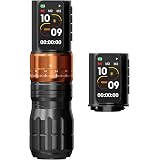
Rotary machines, conversely, use a small motor to drive the needle in a smooth, continuous up-and-down motion. A cam on the motor’s shaft converts the rotational motion into linear motion, pushing and pulling the needle.
- The “Speed” Factor: The video explains that rotary machines run off “speed.” Increasing the voltage on a rotary machine primarily makes the motor spin faster, resulting in more rapid needle cycles. This continuous motion delivers a very consistent and even stroke.
- Quiet Operation & Less Vibration: Generally, rotary machines are quieter and produce less vibration than coils. This can reduce artist fatigue during long sessions and offer a different tactile experience.
2. Precision in Motion: Coil Tattoo Machines for Optimal Lining
When it comes to executing crisp, clean outlines, many professional artists, including the speaker in the video, find themselves reaching for a coil machine. This preference stems directly from the “force” principle.
- The Art of the Outline: Lining demands precision. You need to create a solid, unwavering line that is consistently saturated with ink, without overworking the skin. The forceful hit of a coil machine ensures the needle drives deep enough to deposit ink effectively in a single pass, which is crucial for sharp lines.
-
Why Coils Excel:
The video’s speaker explicitly states a recent switch back to coil machines for lining, citing their efficiency. Consider the Vlad Blad Pro Liners:
- Armature Bar Weight: The thinner, lighter armature bar of the Vlad Blad Fine Liner is perfectly suited for smaller needle groupings like a 3, 5, or 7-round liner. This lighter bar allows for rapid, agile movement, enabling the artist to line quickly and with great control over delicate details.
- Heavier Duty Lining: For larger needle groupings, such as a 9 to an 18-round shader used for bold outlines, the Vlad Blad Infinite Liner with its thicker, heavier armature bar comes into play. This heavier bar delivers the necessary force to push larger groupings of needles through the skin without losing speed or consistency, ensuring even ink saturation across broader lines.
While a rotary can be sped up for lining, the video’s caution about “cutting people” highlights a critical drawback. Rotaries, when pushed to extreme speeds for lining, can indeed tear or damage the skin because their speed lacks the same inherent “force” to consistently implant the ink without excessive passes or aggressive movement.
3. Smooth Transitions: Rotary Machines for Shading and Color Packing
While coils are often the champion for lining, rotary tattoo machines truly shine when it comes to smooth shading, blending, and packing solid color. Their continuous, even motion is ideal for these applications.
-
Rotary’s Role: Effortless Saturation
The consistent motion of a rotary machine allows for a more even distribution of pigment, creating seamless blends and fully saturated blocks of color. This makes them highly effective for:
- Black and Grey Shading: Achieving soft gradients and smooth transitions from dark to light is simpler with the predictable stroke of a rotary.
- Color Packing: Filling in large areas with solid color requires consistent ink deposit to avoid patchy results. Rotary machines provide this uniformity, reducing the likelihood of “holidays” (missed spots).
- Color Blending: The smooth action is excellent for blending different hues, allowing colors to merge seamlessly on the skin.
-
Technique and Feedback with Rotary Machines:
The video points out that with rotaries, “if you’re not careful, you can beat up the skin really quickly. There’s really no feedback.” This is a crucial insight. Because rotaries operate so smoothly and quietly, an artist might not immediately feel if they are overworking the skin. It requires a keen understanding of technique, needle depth, and hand speed to prevent trauma.
-
All-Rounders vs. Specialists: The Stroke Length Debate
Many modern rotary machines are designed to be “all-rounders,” offering adjustable stroke lengths (e.g., from 4.2 mm down to 2.0 mm as mentioned in the video). While versatility sounds appealing, the speaker’s experience suggests a common truth: machines attempting to do everything often excel at only one or two things.
- Longer Strokes (e.g., 4.0mm+): These are typically better for lining and packing bold color, as they drive the needle deeper with more power.
- Shorter Strokes (e.g., 2.5mm – 3.5mm): Ideal for softer shading, delicate work, and color blending, providing a gentler impact on the skin.
Attempting to line with a machine set to a long stroke that is better for shading can indeed lead to struggling, as the video highlights. It’s often more effective to have specialized tools for specialized tasks.
4. The Hybrid Approach: Bridging the Gap in Tattoo Equipment
Hybrid rotary machines, such as the Dan Kubin 46er or the Vlad Blad Avenger 2 Pro mentioned in the transcript, represent an intriguing middle ground. They combine aspects of both coil and rotary designs, often featuring a motor-driven cam that interacts with an armature bar, similar to a coil.
-
Understanding Hybrid Rotary Tattoo Machines:
These machines often aim to deliver some of the punch and tactile feedback of a coil while retaining the consistency and often lighter weight of a rotary. The motor, often positioned sideways, still drives a cam, but this cam then manipulates an armature bar to achieve the needle’s reciprocating motion. This can give them a unique feel, sometimes described as a “softer hit” than a traditional coil but more direct than a standard rotary.
-
Appeal and Complexity:
Hybrid rotaries can be appealing for outlines because they are often “a little bit more simple to deal with than coils” for some artists, as the speaker notes. They might require less fine-tuning than a traditional coil machine to get started. However, achieving peak efficiency with a hybrid often means carefully setting it up and adjusting it to your specific style and preferences. The speaker’s comment about needing “time to mess with it” to get a full opinion on the Dan Kubin 46er underscores this point; they have a learning curve to truly master their nuances.
5. Making Your Choice: Practical Considerations for Tattoo Artists
Ultimately, the choice between coil vs rotary tattoo machines for any given task comes down to a blend of the machine’s inherent characteristics, the specific tattoo requirement, and your personal tattooing style and comfort.
-
Matching the Tattoo Machine to the Task:
- For Lining: Coil tattoo machines are often superior due to their forceful hit, providing crisp, saturated lines with fewer passes. If using a rotary for lining, ensure it’s specifically designed for lining or set to an appropriate stroke length, and understand its limitations.
- For Shading and Color Packing: Rotary tattoo machines excel with their smooth, consistent motion, perfect for seamless gradients and dense color saturation. Coils can be used for a more traditional, punchy shading style, but require skilled handling to avoid overworking the skin.
- For Versatility: Hybrid rotaries offer a balance and can be excellent multi-taskers, but often require a dedicated period of adjustment to truly master their potential across different applications.
-
Personal Preference and Progression:
The speaker’s journey from using rotaries for lining to switching back to coils is a testament to the evolving nature of an artist’s preference. As skills develop, an artist might seek out machines that align better with their refined technique and desire for greater efficiency. What felt sufficient as a beginner might become a “bottleneck” as one progresses.
It is essential for every tattoo artist to experiment with different types of tattoo machines, understand their mechanics, and determine what feels most comfortable and effective in their hands. The best tattoo machine is the one that allows *you* to produce your best work consistently, whether it’s a dedicated coil, a versatile rotary, or a nuanced hybrid.
Inking Decisions: Your Coil and Rotary Tattoo Machine Questions
What are the two main types of tattoo machines?
The article discusses two primary types of tattoo machines: coil machines and rotary machines. Each type has distinct ways of operating and specific advantages.
How do coil tattoo machines work?
Coil machines use electromagnetism, where electricity creates a magnetic field that rapidly pulls an armature bar down, causing the needle to strike the skin in a hammering motion.
How do rotary tattoo machines work?
Rotary machines use a small motor to move the needle in a smooth, continuous up-and-down motion. This provides a very consistent and even stroke.
Which type of tattoo machine is generally better for lining versus shading?
Coil machines are often preferred for crisp outlines and lining due to their forceful hit. Rotary machines typically excel at smooth shading, blending, and packing solid color because of their consistent, even motion.